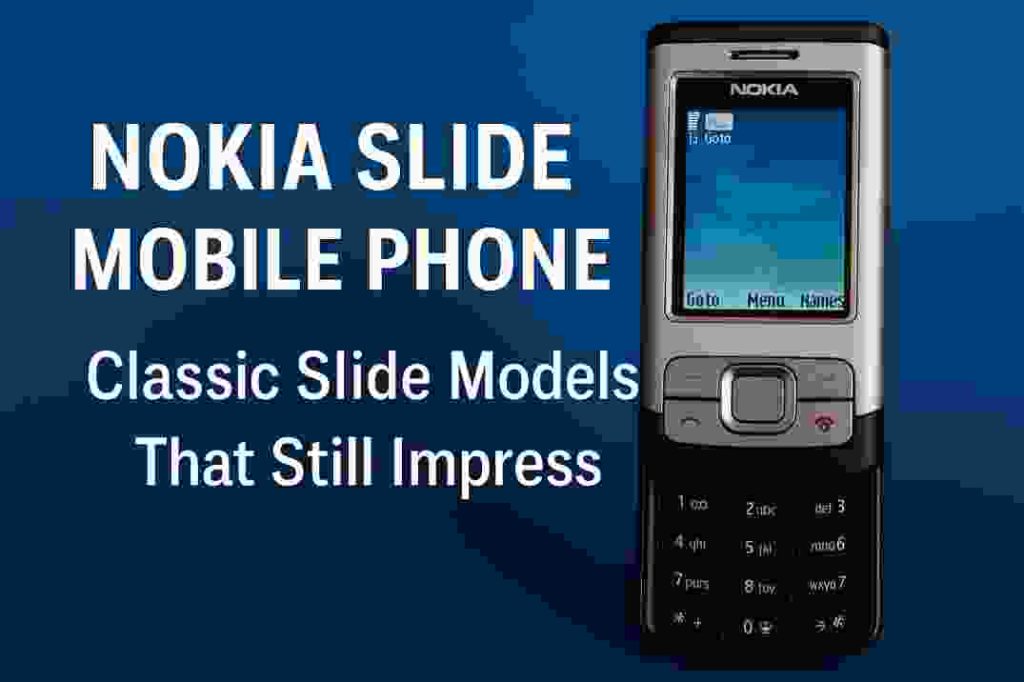
Introduction: The Nokia slide mobile phone era defined sleek, innovative design in the 2000s. Unlike bulky smartphones today, these sliders combined style and practicality. The first notable Nokia slider was the 1996 Nokia 8110, a compact phone with a sliding cover protecting the keypad. This “banana phone” became iconic for its curved design and use in The Matrix. Over the next decade, Nokia released many slider models that fans still admire. These phones offered comfortable texting (hidden keypads), strong battery life, and solid build quality. In this guide, we’ll explore the history of Nokia sliders, highlight standout models, and explain why classic Nokia slide phones still impress today.
History of Nokia Slider Phones
Nokia pioneered the slider form factor, starting with the 8110 in 1996. By hiding the keypad behind a sliding cover, it kept the phone compact and protected. Users loved the tactile feel of sliders: revealing the hidden keypad with a slide was satisfying. Throughout the 2000s, Nokia expanded this idea across many models. For example, the Nokia 6500 Slide (released 2007) was a midrange phone with a stainless steel frame and a sleek piano-black design. It ran the Series 40 platform and was praised for its look and feel. Similarly, the Nokia 6700 Slide (2010) was a 3G slider with a metal case and smartphone-like features.
- Practical Benefits: Sliders kept phones pocket-friendly. Keypads stayed hidden until needed, preventing accidental keypresses. Slide action gave one-click access to calls and features, unlike touchscreen menus.
- Nostalgia & Simplicity: Modern users often miss the simplicity of early phones. Slide phones did “what phones were meant for – staying connected” without constant distractions.
- Durability: Many Nokia sliders were built tough. For instance, the Nokia 8110 (1996) had a remarkably long battery life for its size. The durable metal and plastic construction of later models like the 6500 Slide added to their longevity.
Iconic Nokia Slider Models
Nokia 8110 “Banana Phone” (1996)
The Nokia 8110 was the first of Nokia’s slider phones, debuting in 1996. Its sliding cover protected the keypad and automatically answered calls when opened. With its distinctive curved shape, it earned the nickname “banana phone”. Designed for business users, the 8110 was small and light but still offered excellent battery life. Its popularity surged after appearing in The Matrix (1999). The 8110 set a high standard for Nokia’s slider design, making it a classic slide mobile phone that still impresses collectors today.
Nokia 6500 Slide (2007)
The Nokia 6500 Slide was a midrange slider released in 2007. It featured a brushed stainless steel body and black accents, giving it a premium feel. This phone ran the Series 40 platform and focused on multimedia (music, photos, video). Its 3.2 MP camera (with autofocus) and user-friendly interface made it popular for both style and function. Critics praised the 6500 Slide’s overall design. Even today, the tactile slide mechanism and metal chassis of the 6500 Slide impress enthusiasts with their quality.
Nokia 6700 Slide (2010)
The Nokia 6700 Slide continued Nokia’s legacy in 2010, blending slider elegance with smartphone features. Running Symbian S60, it offered email, web browsing, and 3G connectivity. The 6700 Slide had a 5.0 MP Carl Zeiss camera with flash and even a front VGA camera for video calls. TechRadar noted the phone “feels like a quality device” – its chassis was “solid,” and the slider clicked smoothly when opened. In many ways, it combined the best of Nokia’s classic sliders (compact size, robust build) with the multimedia demands of its era.
Nokia N95 (2007)
While primarily known as a smartphone, the Nokia N95 featured a two-way slider design. Released in 2007, it had two sliding mechanisms: one hid media playback buttons, and the other revealed the numeric keypad. The N95 was a breakthrough device with a 5 MP Carl Zeiss camera (with dual-LED flash), GPS, and Wi-Fi. It was lauded as a “multimedia computer” of its time. The dual-slider approach set the N95 apart and left a lasting impression on the smartphone era.
Other Notable Nokia Sliders
- Nokia 2680 Slide (2008): An affordable model with a smooth curved slider, VGA camera, and simple interface. Its compact design and durability made it a favorite for everyday users.
- Nokia 6260 Slide / 6220 Slide: Earlier sliders with rotating or sliding QWERTY keyboards (used in business models).
- Nokia XpressMusic Series (e.g., 5610, 5320): Media-focused sliders with colorful designs and music buttons.
- Nokia E7-00 (2011): A smartphone with a full QWERTY keyboard that slides out.
- Nokia 8800 Series: High-end luxury sliders with stainless steel bodies (e.g., Nokia 8800 Sirocco).
Each of these models showcased Nokia’s slider design principles: hidden keys, solid construction, and user-friendly features. Many had premium materials (metal or high-quality plastics) that still impress today.
Why Nokia Slide Phones Still Impress
Classic Nokia sliders continue to captivate fans for several reasons:
- Solid Build Quality: Many Nokia sliders, like the 6500 Slide and 6700 Slide, used metal chassis and precision engineering. Even years later, the slide mechanisms remain smooth and satisfying. Reviewers noted that phones like the 6700 Slide felt “solid” and produced a “good, loud click” when opening. This robust construction leads to exceptional durability – a reason why old Nokias often outlast modern phones.
- Battery Life: Unlike modern smartphones, classic sliders had small color screens and basic OS, yielding long battery life. As one historian notes, the Nokia 8110 was “one of the smallest and lightest phones,” yet it still had better battery life than its predecessor. In the age of quick drains, the multi-day batteries of these classics still impress.
- Tactile Satisfaction: The physical act of sliding open a phone is inherently satisfying. Users remember the click of each button press. As one tech writer observes, people miss “the satisfying motion of ending a call on a slide phone”. Real keys mean no accidental touches and a nostalgic Snake game – experiences largely gone in today’s touchscreen world.
- Nostalgic Appeal: For many, a Nokia slider phone represents simpler times. Slide phones deliver “connectivity without distraction”. This nostalgia drives collectors and new buyers alike. Even HMD Global (which now owns Nokia phones) reintroduced the 8110 as a 4G banana phone, banking on this retro appeal.
- Enduring Features: Despite being years old, these phones offered advanced features for their time. For example, the 6700 Slide’s 5 MP camera and Carl Zeiss lens was exceptional in 2010. The robust feature set combined with classic design impresses those who revisit these models.
In summary, Nokia sliders impress because they blend form and function in a timeless way. Their solid design, long battery, and satisfying interface give them a ”built to last” reputation.
Modern Revival and Alternatives
While slide phones faded from the mainstream by the 2010s, a few modern devices carry the slider spirit. HMD Global’s 2018 Nokia 8110 4G revival is one example – a faithful remake of the banana phone with apps and 4G, yet it maintained the iconic curved slider cover. Some rugged or feature phones today use sliders or foldable keyboards for on-the-go texting. (For example, the Nokia-branded candybar 2720 Flip offers physical buttons in 2022.)
Additionally, foldable smartphones owe a debt to the slider concept. Modern foldables (like the Samsung Galaxy Z series) use flexible screens but still aim for compact portability – similar goals to old sliders. Tech writers note that the slider format is “quietly making a comeback” in spirit, as people crave simpler, durable devices. Indeed, slide phones are perfect for minimalists or as a reliable backup phone.
For those missing the classic slider, some alternatives exist:
- Feature Phones with Sliders: A few small brands (or refurbished models on eBay) still sell slider phones with basic cameras and keypads.
- Flips and Swivels: Phones like the new Nokia 8210 4G (rebooted) or old Motorola Razr foldables offer nostalgic designs, though not true sliders.
- Slide Keyboard Keyboards: For typing enthusiasts, devices like BlackBerry’s later models (e.g., Priv with a slide-out keyboard) echo the slider typing experience.
People interested in Nokia sliders often hunt on auction sites or buy refurbished units. These classic phones are sought after for style or retro use. If you do pick one up, ensure the battery is in good shape – Nokia sliders often allow easy battery replacement, a boon for longevity.
FAQs
- What made Nokia slide phones popular?
Nokia’s sliders stood out with their hidden-keypad design, durable build, and long battery life. They offered a satisfying tactile experience – sliding to answer calls or slide out a keyboard – which many users find nostalgic. Their simplicity (no constant apps/notifications) also appeals to fans of distraction-free phones. - Which Nokia slider models are iconic?
Key models include the Nokia 8110 (the original “banana phone”), 6500 Slide, 6700 Slide, and Nokia N95. The 8110 (1996) pioneered sliders. Mid-range favorites were 2680 Slide (2008) and 6500 Slide (2007). The high-end N95 (2007) featured a dual-slider design. All are remembered for innovative designs and durability. - Are Nokia slide phones durable?
Yes, many were built to last. For example, the Nokia 6500 Slide’s metal casing and the 6700 Slide’s solid chassis give them a tank-like feel. The 8110 was small but had better battery life than its predecessor. These sturdy builds mean that a well-maintained Nokia slider can still function years later, which often surprises new owners. - Can I use a Nokia slide phone today?
Some Nokia sliders can still make calls and texts on GSM networks. However, as 2G networks phase out, not all models work everywhere. The 8110 4G (by HMD) works on modern networks and even supports apps via KaiOS. For original models, check your carrier’s network. They can be fun as backups or for travel (offering simplicity and battery life). Remember, these phones lack many modern features (no high-speed internet or app stores, except the 4G reboots). - Why is the Nokia 8110 called the banana phone?
Its curved shape and sliding cover resembled a banana, earning it the playful nickname. It had a distinctive look that made it memorable. This model’s popularity (especially after The Matrix) cemented the banana phone image in pop culture.
Conclusion
Nokia slide mobile phone models remain beloved for good reason. They combine timeless design, reliable performance, and nostalgic charm. From the pioneering Nokia 8110 to the advanced N95, each classic slider brought something special. Even today, the smooth sliding action, clear keypads, and sturdy build of these phones impress collectors and tech enthusiasts alike. Whether you’re a retro tech fan or just curious about phone history, exploring Nokia’s slider line is rewarding. Share this article with fellow Nokia fans on social media and let us know in the comments: what’s your favorite Nokia slide mobile phone model?
Don’t forget to like, share, or comment below – we’d love to hear your memories of using these iconic phones!
Nokia slide mobile phone
About the Author