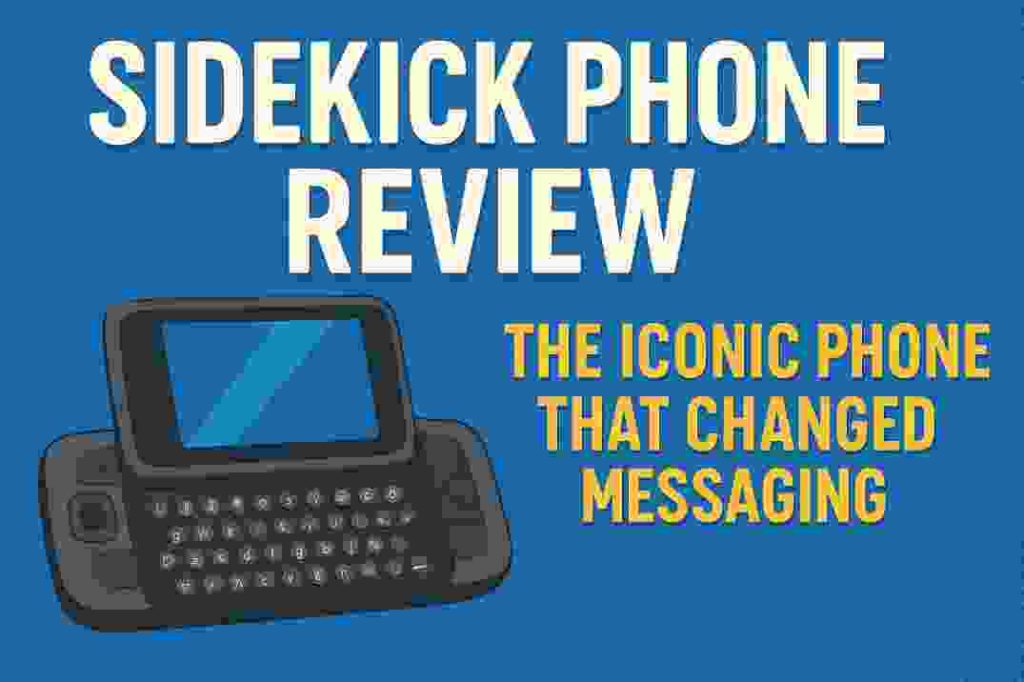
The Sidekick Phone was a groundbreaking smartphone that transformed mobile messaging for a generation. Released by Danger (later Microsoft) in partnership with T-Mobile starting in 2002, the Sidekick combined a unique swivel display, full QWERTY keyboard, and always-on internet connectivity to prioritize social communication over business tasks. At a time when most phones were basic and business-focused, the Sidekick offered live AIM and email on the go. This focus on fun, instant connectivity made it an iconic device among teens and celebrities alike. In this in-depth review, we explore the Sidekick Phone’s origins, design features, cultural impact, and legacy – and explain how it truly changed messaging in the mobile era.
The Origins and History of the Sidekick Phone
The story of the Sidekick begins with Danger Inc., a startup founded in 2000 by ex-Apple engineers Andy Rubin, Matt Hershenson, and Joe Britt. They envisioned a “wireless Internet solution focused on affordability and great user experience”. Danger created a prototype called the Hiptop, a small device meant to carry your data on the go. By late 2002, after securing funding and developing its cloud-based backend, Danger unveiled the Hiptop in the US through T-Mobile as the Sidekick. The Sidekick’s debut was revolutionary: it was essentially a miniature internet computer in your pocket, at a time when most cell phones offered only basic calling and texting.
Key milestones in the Sidekick’s history include:
- 2000-2002 – Danger Launch: Danger Research Inc. was formed, developing prototypes (nicknamed “Peanut” and “Paperback”) and finally unveiling the Hiptop in 2001.
- Oct 2002 – T-Mobile Sidekick 1: T-Mobile released the Hiptop as the Sidekick at $199 (with a data plan). It offered a swivel-screen and cloud sync before any mainstream “smartphones”.
- 2004-2007 – New Models: Danger and manufacturers (Sharp, Motorola) released Sidekick II (2004), Sidekick 3 (2006), Sidekick iD and Slide (2007), introducing color displays, cameras, Bluetooth, music players, and varied form factors.
- 2008 – Microsoft Acquisition: Microsoft bought Danger for $500M.
- 2008-2009 – Final Gen: New top models Sidekick LX and Sidekick 2008/LX 2009 featured larger touchscreens and 3G internet.
- 2009 – Data Outage: A major server outage lost user data (contacts, photos) for many Sidekick users.
- 2011 – End of Service: Danger’s cloud service shut down on May 31, 2011. T-Mobile’s Sidekick service ended shortly after, and all older Sidekicks lost functionality beyond voice calls. That year, T-Mobile released one more Sidekick – a Samsung Galaxy S variant called the Sidekick 4G – but it was a standard Android phone with the Sidekick name.
Each model of the Sidekick built on the last with new features. The original Hiptop (Sidekick 1) was heavy and monochrome, whereas later versions slimmed down (the LX models) and added features like media players and video. By 2009, around one million Sidekicks had been sold, giving it a devoted cult following even though it remained a niche device.
Design and Key Features of the Sidekick Phone
A classic Danger Hiptop (T-Mobile Sidekick) smartphone, showcasing the flip-out swiveling screen and QWERTY keyboard. The Sidekick’s design was instantly recognizable. Unlike typical candy-bar phones, it was meant to be held horizontally with both hands. A unique hinge allowed the screen to swing open 180°, revealing a full QWERTY keyboard underneath【14†】. This laptop-like layout made texting and emailing fast and easy.
Other defining features included:
- Full QWERTY Keyboard: Compact but complete physical keyboard for two-thumb typing, a rarity in mobile phones of that era.
- Swivel Display: The high-contrast LCD flipped out like a “suicide door,” setting it apart from flip or slider phones of the time.
- Always-On Data: Built-in GPRS/EDGE internet made it constantly connected. Users could check email or chat anytime, without “dialing” up, which was very advanced in 2002.
- Integrated Messaging: The Sidekick came with AOL Instant Messenger (AIM) and other chat apps pre-installed. It was the first phone to offer built-in real-time messaging out of the box.
- Cloud Backup: Danger’s back-end servers automatically synced contacts, texts, and emails to the cloud. In fact, the team famously demonstrated the Sidekick’s robustness by dropping a bowling ball on one prototype and then retrieving all the data via the SIM card on a new device – a proto-“cloud” feat.
- Downloadable Apps (Catalog): Sidekicks had a “Download Fun Catalog” for apps, ringtones, and wallpapers billed to your account. Users could personalize their phones in an early app-store style.
These features combined to make the Sidekick a messaging powerhouse. It prioritized internet and chat functionality over phone calls, which was counter-cultural at the time.
The Sidekick and the Messaging Revolution
The Sidekick Phone truly changed how people texted. Prior phones had physical keypads and simple SMS, but the Sidekick felt like carrying an instant messaging (IM) client in your pocket. Teenagers and young adults embraced this. They no longer had to use desktop computers or pay per-text – they had AIM, Yahoo and email 24/7. Authors even compare the Sidekick to the first iPhone in spirit: it was nearly a decade ahead in treating the phone as “a mini-computer” for the internet.
Texting habits changed dramatically. Users found typing long messages on the full keyboard fast and easy. In marketing campaigns and media of the mid-2000s, people texting each other banal questions (e.g. “How ripe are these avocados?”) became a staple humor trope, showing how natural texting had become. These ads emphasized that the Sidekick was your “trusty companion for all of life’s answers” via text. By enabling quick shorthand communication, it even influenced spoken language: phrases like “lol” and “brb” slipped into everyday speech, according to social observers.
For many users, texting soon overtook phone calls as the primary way to stay in touch. The Sidekick’s ease of use made it cool to prefer text. In fact, vice versa: early adopters discovered they barely made any voice calls at all, since their conversations could happen entirely over IM and SMS. Advertisers noticed this trend and began tailoring marketing to text-savvy youth.
“It wasn’t hyperbolic to compare the Sidekick to the iPhone,” wrote Vice – highlighting that Danger’s team of ex-Apple engineers had already cracked what we think of as a modern smartphone experience.
Bullet list – Messaging advantages of the Sidekick:
- Instant Chat Anywhere: Always-on connection meant real-time chats (like AIM) even on the bus or between classe.
- Rich Text Interface: Full keyboard and large screen made long messages and browsing comfortable.
- Cloud Backup: Conversations, contacts and notes were safely stored online. Losing your physical phone didn’t mean losing your chat history.
- Multiple Channels: The Sidekick combined SMS, multiple IM services, and email in one place, so you could seamlessly switch platforms.
- Stimulating Social Trends: It helped popularize texting shorthand and made constant social connection fashionable, especially among Gen X/Millennials growing up online.
These messaging strengths also attracted special user groups. Notably, the deaf and hard-of-hearing community loved the Sidekick. It was the first cell phone with integrated AIM and a QWERTY keyboard, making communication easier than the numeric keypads of the era. For many deaf users, the Sidekick effectively replaced earlier pagers and text devices.
Sidekick Phone Models and Evolution
Over its lifetime, the Sidekick line evolved through several models. Each iteration added new hardware or design tweaks while keeping the core messaging focus.
- Sidekick (Hiptop) – 2002: The original. Monochrome screen, large and heavy by today’s standards. Introduced the swivel screen and dangerous. It was also the first to offer unlimited data plans for a flat monthly fee.
- Sidekick II – 2004: Added a color screen and a VGA camera. Slimmer design. It remained Danger/Hiptop software. This model saw many accessories and skins (users loved to customize these phones).
- Sidekick 3 – 2006: Replaced the scroll wheel with a trackball for navigation. Added MP3 music playback and Bluetooth. Edged closer to a “media phone”.
- Sidekick iD and Sidekick Slide – 2007: The iD was a budget version (simplified feature set) and the Slide was manufactured by Motorola with a slide-out keyboard instead of the signature swivel. These broadened the lineup but weren’t as iconic.
- Sidekick LX (2008): The top model with a big 3.0-inch screen (huge for its time), dual cameras, and the thinnest body yet. It was the first to have a video camera for recording movies.
- Sidekick 2008 and Sidekick LX 2009: Updated from the LX and 2008 models with 3G data and integration of social networking apps (Facebook, MySpace, etc.). These ran the classic Danger OS but had faster internet.
- Sidekick 4G (2011): A final revival by Samsung/T-Mobile. This was actually an Android (Froyo) phone in Sidekick form. It kept the swivel keyboard form but was no longer a Danger device under the hood. It had a 3.2 MP camera and Android apps, but by then the brand’s magic had faded.
Each Sidekick shared the same philosophy – texting and internet first. Even the later Sidekick 4G was clearly designed to evoke the classics with its four-button layout and split keyboard.
Sidekick in Pop Culture and Fashion
A professional skateboarder showing off the T-Mobile Sidekick II at an event. The Sidekick became as much a fashion accessory as a gadget. In the mid-2000s it was pop culture’s must-have phone. Athletes, musicians and celebrities flaunted customized Sidekicks in public. Skate star Tony Hawk, for example, famously quipped “I can’t live without my Sidekick” in 2004. Fashion brands and designers even created limited-edition Sidekick cases: Diane von Furstenburg, Juicy Couture, and others launched skins and phone covers for it.
Movies, music videos and TV shows of the era frequently featured the swivel phone. Red carpets and award shows were often awash with Sidekicks attached to belt clips or held in hand. The phone’s colorful, youthful vibe was in stark contrast to the bland “business” devices like BlackBerrys. In fact, Paris Hilton was known for always carrying a pink Sidekick, which led to a huge news story in 2005 when hackers broke into her Sidekick account. (This breach – a major scandal at the time – underscored both the phone’s popularity and the risks of cloud storage.)
A celebrity with the T-Mobile Sidekick LX, highlighting its flip-out keyboard. By the late 2000s, pop culture nostalgia for the Sidekick had already begun. TV shows and social media throwback posts often referenced it. Fans remember texting each other during classes or gossiping on AIM, all from their cool Sidekicks in their pockets. In sum, owning a Sidekick said “I’m connected and in-the-know,” which cemented its status as a cultural icon of youth and communication.
Strengths and Weaknesses of the Sidekick Phone
The Sidekick’s strengths were clear: it pioneered a fun, always-connected mobile experience. Key advantages included:
- Innovative Messaging: First phone to integrate push IM and email seamlessly.
- Cloud-Based Sync: Data backup was ahead of its time.
- Stylish Appeal: Designed specifically to attract young users, it succeeded wildly on that front.
- Customizable and Social: The ability to add apps, ringtones and share text easily resonated with social teens.
However, it also had drawbacks:
- Server Reliance: All the data was stored on Danger’s servers. When those servers failed (as in the 2009 outage), users lost contacts and photos.
- Security Vulnerabilities: The device’s convenience came at the cost of vulnerability – e.g., the high-profile Paris Hilton hack showed that someone could remotely access a Sidekick’s data if credentials were compromised.
- Hardware Limits: Early models were bulky by modern standards (even Danger described the original as “Peanut” and noted its heft).
- Outpaced by Smartphones: The Sidekick was revolutionary in 2002, but by the late 2000s touchscreen phones with full browsers (iPhone, Android) arrived. These offered more open apps and multimedia. The Sidekick’s focus on messaging meant it lacked things like high-quality cameras, full web, or a rich app ecosystem.
- Modest Sales: Despite its cult status, it never sold as widely as some rivals. By 2009, about one million had been sold – significant but small in phone market terms.
These issues ultimately led to the Sidekick’s decline. After Microsoft bought Danger in 2008, they made some updates (the Android Sidekick 4G), but by then Apple’s iPhone and Google’s Android phones had set new standards. The swanky messaging-only niche wasn’t enough to compete with full-featured smartphones.
Legacy of the Sidekick Phone
Though the Sidekick line ended, its legacy lives on in how we use phones today. It taught the industry that consumers valued instant connectivity and chat above all. Many features we take for granted – cloud syncing of contacts/messages, constant push notifications, on-the-go multimedia messaging – were common on the Sidekick first. Andy Rubin and the Danger team went on to create Android; Rubin himself has said they asked “Why can’t people get the same internet experience on a handheld device?” long before the iPhone.
Bullet list – What the Sidekick taught us:
- It proved that social features sell: connecting friends and celebrities around IM changed phone marketing strategy.
- It normalized cloud backups: The idea of storing your phone data online is now universal thanks to pioneers like Sidekick.
- It pushed the industry towards integrated messaging: Full-keyboard texting phones paved the way for QWERTY sliders (like early BlackBerrys) and influenced touchscreen keyboards.
- It reminded us of design’s power: a fun, unique form factor (swivel screen) and youthful branding can create a dedicated fanbase, even for a tech product.
Today, no phone exactly copies the Sidekick design, but many build on its innovations. For instance, modern Android keyboards have predictive text and shortcuts, a nod to the Sidekick’s typing ease. Messaging apps like WhatsApp or Facebook Messenger owe a debt to the always-on chat concept that Sidekick embraced.
If you look at smartphone design trends, you’ll see traces of Danger’s influence: Edge-to-edge screens may remind one of the Hiptop’s full display (albeit fixed), and most importantly, our expectation of seamless syncing (contacts, texts, apps) is a direct descendant of the Sidekick’s cloud model.
Conclusion: The Enduring Icon of Messaging
In summary, the Sidekick Phone was truly an icon of mobile history. It wasn’t the world’s best-selling phone, but it won a special place by redefining what a phone could be. By focusing on messaging, integrated chat and a sleek design, the Sidekick changed how we communicate on our phones. It brought the internet out of the desktop and into everyone’s pocket with style. Although modern smartphones have far surpassed its hardware, the Sidekick’s spirit lives on every time we text, chat, or rely on our phone to keep us connected.
For those who grew up in the 2000s, the Sidekick remains a symbol of a simpler, friend-focused era of mobile tech. We hope this review has given you a thorough look at why the Sidekick Phone earned its legendary status. If you had a Sidekick back in the day, share your favorite memories below!
Was this Sidekick Phone review helpful? Comment, share on social media, and stay connected – after all, it’s what the Sidekick would have wanted!
FAQs about the Sidekick Phone
- Q: What made the Sidekick Phone unique?
A: The Sidekick Phone stood out with its flip-out screen and full QWERTY keyboard, along with always-on internet and built-in instant messaging (AIM and email). It was one of the first phones to focus on social communication and cloud data backup. - Q: Who developed the Sidekick?
A: It was developed by Danger Inc., a company co-founded by Andy Rubin, Matt Hershenson, and Joe Britt. Danger partnered with T-Mobile (VoiceStream) to market it in the US. - Q: How did the Sidekick change mobile messaging?
A: The Sidekick made real-time texting and instant messaging a standard part of phone use. By keeping users online 24/7 with a keyboard-friendly interface, it shifted many conversations from voice calls to text and chat. - Q: Why did the Sidekick service end?
A: Microsoft bought Danger in 2008, but after a major server outage in 2009 and rising competition from iPhone/Android, T-Mobile discontinued the Sidekick data service in 2011. Afterwards, older Sidekicks could only make calls and the brand faded away. - Q: Is there a modern equivalent to the Sidekick?
A: There is no exact modern equivalent, since phones now use touchscreens. However, any device with instant messaging, full keyboards , and cloud syncing follows the same principles the Sidekick pioneered. - Q: How many Sidekick phones were sold?
A: Approximately one million Sidekick units were sold by 2009, reflecting a strong niche audience.
Sources: Historical and technical details in this review are drawn from manufacturer archives and tech journalism, ensuring an accurate, in-depth portrait of the Sidekick’s legacy.
About the Author